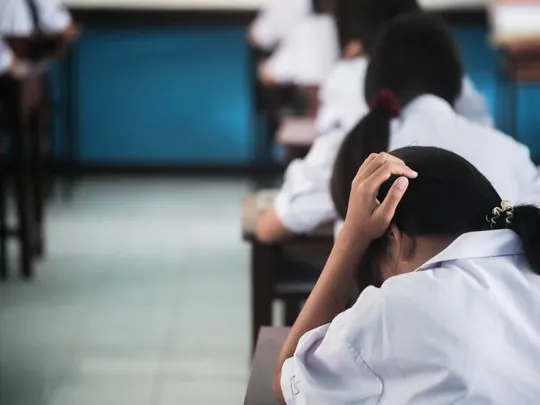
“Forcing children through a system that wasn’t built for them is not just frustrating — it’s a national crisis”
Gavin McLean, Principal of Wolsey Hall Oxford, on why the mainstream education system is failing today’s children
This spring, we surveyed 2,000 parents to understand their views on the current education system. The findings reveal something alarming and deeply concerning, over two-thirds of parents feel that the current school system is failing their child.
From rigid timetables to limited extra-curricular opportunities, the one-size-fits-all approach is no longer working and hasn’t been for a long time. The system in place today was originally designed in the 1850s, when parents worked long hours in factories and schools were largely about keeping children occupied.
The fact we continue to follow this outdated model, despite all the technological advances of the modern world, represents a national crisis for students’ wellbeing and their future prospects.
If we were running healthcare the way we run schools, using a system designed in the 1850s, there would be a national outcry. Yet in education, the crisis remains silent because children lack the voice and power to demand the change they deserve, and parents are not privy to lots of the inner workings of daily life in school.
Our research shows that 61% of parents feel their child struggles with the limited flexibility of today’s education system. For children with Special Educational Needs (SEN), the picture is even more stark: 81% of parents with children who have dyslexia, dyspraxia, autism, or ADHD say the current model is outdated, and nearly three-quarters of all parents (71%) believe a one-size-fits-all approach no longer works.
This perspective has only grown since the pandemic when the absence of national partnerships with online providers and the lack of established hybrid models became impossible to ignore. Schools were doing everything they could, but the system was not built for a smooth shift online. Families naturally sought out whatever alternatives they could find.
The UK is notoriously bad at learning from best practices happening elsewhere in the world. For example, in the US, 3.7 million students are enrolled in non-traditional schooling including homeschooling and hybrid models. The majority of these programs are funded by the state, ultimately supported by the government. Families are offered a real menu of choices, giving children and parents the flexibility to find the approach that best suits their needs.
So, what needs to change?
The urgent need for flexibility
Nearly half of all parents (47%), rising to 50% among those with children with special educational needs (SEN), believe a more flexible education system would better support their child’s wellbeing and academic success. Similarly, 44% of parents (rising to 51% of SEN parents) feel their children would benefit from having more control over how and when they learn.
Parents are also advocating for alternative learning approaches that move beyond the traditional classroom model. Although 62 percent of parents report a preference for small group teaching, what they are really asking for is more personalised support and a learning pace that suits their child.
Of those surveyed, 40% of parents are interested in project-based learning, and 26% support a blended approach that combines classroom and online education. These preferences reflect broader societal changes: learning, like work, is increasingly hybrid, hands-on, and personalised.
Crucially, 71 percent of parents view the traditional 9 a.m. to 3 p.m. school day as outdated. It was built around buildings and school timetables, not around children. It even restricts subject choice, because a child can only take what fits into the timetable and the rooms available. In 2026, this makes little sense when so many more learning options could be accessible.
The system is simply unacceptable. It takes control away from children and prevents parents from making the educational choices their child actually needs.
Homeschooling as a flexible alternative
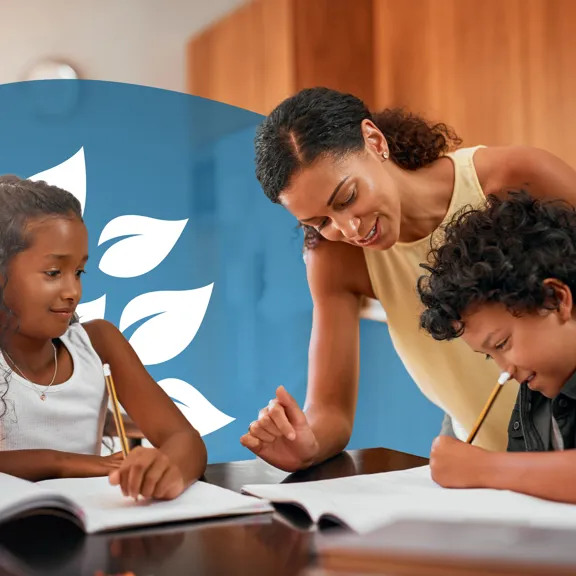
It’s no wonder then that more than half of parents (55%) have considered homeschooling, with this figure rising to 73% for SEN families. Homeschooling offers a way to create a personalised and flexible environment, where education can adapt to the child – rather than the other way around.
At Wolsey Hall Oxford, we’ve seen first-hand how homeschooling can transform learning. It allows children to engage with education at their own pace, explore their interests, and develop confidence without the pressure of a rigid timetable. Hands-on experiences, real-world exploration, and opportunities to build practical skills all become possible when learning is personalised.
As I often say, the current education system was designed for children with parents who worked in the factories of the 19th century. But today’s children are not factory products. They are individuals with creativity, curiosity, and unique learning needs.
Forcing children through a system that wasn’t built for them is not just frustrating — it’s a national crisis
The benefits of personalised learning
Our survey shows that children thrive when learning is hands-on, experiential, and tailored to their needs. Over three-quarters of parents (78%), rising to 80% among SEN families, believe their child would benefit from learning beyond the traditional desk. More than half (54%) want a practical approach, and almost all (99%) want opportunities for their child to explore the world beyond the classroom. This near-universal desire suggests families are increasingly looking for learning models that offer greater freedom, flexibility and breadth of experience.
But flexibility isn’t just about timetables, it’s about fostering confidence, curiosity, and independence. It means creating a learning environment where children are excited to learn, their strengths are nurtured, and their challenges are supported.
Class sizes today make this difficult. In a 60-minute class with 30 students, allowing 10 minutes for setup and wrap-up, each child receives roughly 90 seconds of one-on-one attention, far less than parents expect, or their children need. I have huge sympathy for all frontline practitioners in all areas of education because the odds are absolutely stacked against them from the start.
Online learning environments offer significant benefits by removing many of the barriers present in traditional classrooms. In physical settings, factors like disruptive behaviour, background noise, and crowded spaces can prevent even the most engaged learners from focusing or participating fully.
So, what’s the solution?
Looking ahead
The message from parents is clear – the traditional model of education is under pressure, and it’s time to rethink on mass how we teach and support children.
Homeschooling offers an alternative that allows learning to adapt to the child, not the other way around. It’s about building independence, fostering a love of learning, and equipping children with the skills they need for life, not just exams.
At Wolsey Hall Oxford, we are proud to support families on this journey. Our homeschooling courses offer flexible, personalised learning plans designed to help every child thrive academically, socially, and emotionally.
The future of education should not be about outdated systems or rigid timetables. It should be about flexibility, creativity, and putting the child first. By listening to parents, embracing new approaches, and exploring alternatives like homeschooling, we can create a system that truly works for every child.
This research of 2,000 parents of children aged between 5 and 18 was commissioned by Wolsey Hall Oxford and conducted by Perspectus Global in March 2026.